
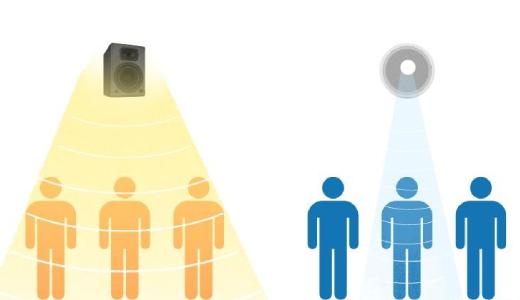
In today’s fast-moving commercial and public spaces, controlling sound is just as important as controlling lighting or design. One of the most advanced solutions making this possible is directional sound speakers. These systems are designed to deliver audio in a highly focused beam, allowing sound to reach only the intended listener while reducing noise spill into surrounding areas.
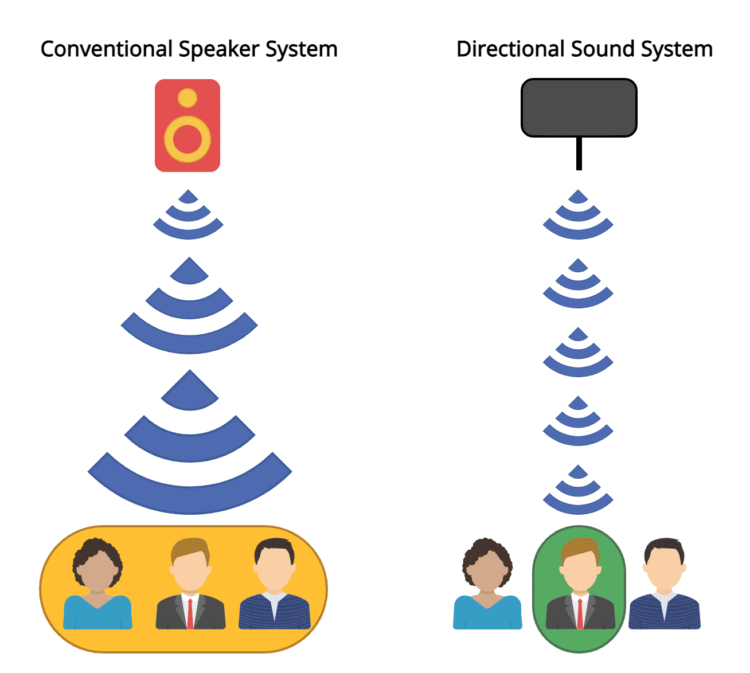
Unlike traditional loudspeakers that spread sound in all directions, directional systems use advanced acoustic engineering to “shape” sound waves. This means businesses and institutions can communicate more effectively without increasing overall noise levels in the environment.
How directional audio technology works
Directional audio relies on technologies such as ultrasonic carriers, phased arrays, or beamforming techniques. Instead of pushing sound outward in a wide radius, these systems concentrate it into a narrow path.
When sound is tightly controlled, it behaves almost like a spotlight—except instead of light, it is audio being directed to a specific location. This allows for precise communication in environments where multiple audio zones exist.
For example, in a retail store, one product display can play targeted information without disturbing customers at another section. In museums, visitors can hear detailed narration at specific exhibits without background interference.
Key benefits of directional sound systems
One of the most important advantages of Office Sound Masking is noise control. Since sound is not widely dispersed, overall background noise in the environment is significantly reduced. This creates a calmer and more comfortable experience for everyone.
Another major benefit is improved clarity. Because the sound is focused, listeners experience less echo and interference, making speech and messaging easier to understand even in busy environments.
Privacy is also enhanced. In offices, healthcare facilities, or exhibitions, sensitive information can be delivered without others nearby overhearing it. This makes directional systems highly valuable in professional settings.
Energy efficiency is another advantage. Traditional systems often require higher volume levels to overcome ambient noise. Directional systems reduce this need by delivering sound directly to the listener.
Where directional audio is commonly used
Directional sound technology is now being adopted across many industries, including:
- Retail environments for product-focused messaging
- Museums and galleries for guided audio experiences
- Corporate offices for private communication zones
- Exhibitions and trade shows for booth-specific audio delivery
- Healthcare environments for patient instructions and privacy
Each of these environments benefits from controlled sound delivery that improves communication without adding noise pollution.
Improving user experience through controlled sound
Modern design is heavily focused on user experience, and sound plays a major role in shaping how people feel in a space. Poorly managed audio can lead to discomfort, confusion, or distraction.
By using directional systems, businesses can ensure that only the intended audience receives the message. This creates a more immersive and focused experience, where sound enhances the environment rather than disrupting it.
Customers are more likely to engage with content when it is clear and non-intrusive. This is especially important in retail and exhibition spaces where attention is limited.
Installation and design considerations
To achieve optimal performance, directional audio systems must be carefully planned. Speaker placement, height, and angle all play a critical role in ensuring accurate sound targeting.
Room acoustics also influence performance. Hard surfaces may reflect sound differently compared to soft materials, so environmental factors must be considered during installation.
For best results, professional planning and setup are recommended, especially in larger or multi-zone environments where precision is essential.
The future of directional audio technology
As technology continues to evolve, directional audio systems are expected to become more compact, affordable, and intelligent. Integration with smart systems and IoT platforms will allow even greater control over how sound is delivered in real time.
This will open new possibilities for personalized audio experiences in public spaces, retail environments, and corporate settings.
Conclusion
Directional audio is reshaping how sound is used in modern environments. By focusing audio delivery and reducing unnecessary noise, it improves clarity, privacy, and user comfort.
From retail stores to museums and offices, this technology offers a smarter way to manage sound. As adoption continues to grow, it is becoming a key part of modern acoustic design strategies.
FAQs
1. What are directional sound speakers used for?
They are used to deliver focused audio to specific areas without spreading sound throughout an entire space.
2. How do directional speakers control sound?
They use advanced technologies like beamforming or ultrasonic modulation to direct sound in a narrow path.
3. Are directional speakers better than normal speakers?
In controlled environments, yes. They reduce noise spill and improve clarity compared to traditional systems.
4. Where are directional audio systems commonly installed?
They are used in retail stores, museums, offices, exhibitions, and healthcare facilities.
5. Do directional speakers reduce noise pollution?
Yes, they significantly reduce ambient noise by preventing sound from spreading unnecessarily across a space.